Introduction
Building your own data center has never been more expensive — or more impractical. The US colocation market is projected to grow from $38.80 billion in 2025 to $65.44 billion by 2030, driven by an 11% CAGR as AI workloads, hybrid cloud architectures, and soaring construction costs push enterprises toward third-party infrastructure.
A modern Tier III facility now runs $10–12 million per megawatt to build. AI-optimized sites exceed $20 million per MW once you factor in liquid cooling and high-voltage distribution.
Colocation solves this by letting organizations house their own servers in professionally managed, third-party data centers — getting enterprise-grade power, cooling, security, and network redundancy without the capital outlay. This guide covers the top 10 USA colocation providers in 2026, how they were evaluated, and what to verify before signing.
Key Takeaways
- Colocation lets businesses house servers in third-party data centers while the provider handles power, cooling, security, and connectivity
- The 10 providers reviewed: Equinix, Digital Realty, NTT Global, QTS, CyrusOne, CoreSite, Iron Mountain, DataBank, Flexential, and TierPoint
- Selection criteria: uptime SLAs (99.999%+), certifications (SOC 2, HIPAA, PCI-DSS), carrier-neutral connectivity, scalability, remote hands support
- Pricing runs from ~$500/month for a single rack to custom quotes for larger deployments; primary market rates average $195.94 per kW/month
- A vendor-agnostic advisor cuts through 300+ providers to match the right certifications and facility to your workload
What Is Colocation and Why It Matters in 2026
Colocation is a service model where businesses install their own servers and networking hardware inside a professionally managed, third-party data center facility. The provider supplies the building, power, cooling, and physical security; the customer owns and operates the equipment.
Colocation is gaining ground in 2026 for three key reasons:
- AI and GPU workloads push power demands well beyond what office environments can support. Providers like Flexential now deliver 1,500+ watts per square foot and 80+ kW per cabinet for GPU-intensive applications.
- Hybrid cloud architectures need a stable physical anchor. Most businesses mix public cloud, private cloud, and colocation to balance cost and control — colocation provides that foundation while enabling direct cloud interconnection.
- Regulatory compliance in healthcare (HIPAA), finance (PCI-DSS), and government (FedRAMP) requires physical hardware control. Colocation delivers this without the capital burden of building a private facility.
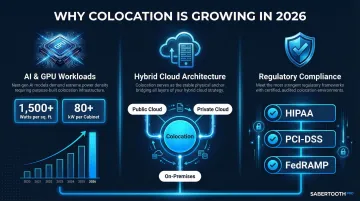
The key distinction from cloud hosting: with colocation, you own the hardware and retain full control. With cloud, you rent virtual resources managed by the provider. That ownership is exactly why colocation has become the on-premises anchor for hybrid cloud strategies — and why choosing the right provider matters so much. Here's how the top 10 stack up.
Top 10 Colocation Service Providers in the USA (2026)
The providers below were selected based on US geographic footprint, uptime guarantees, compliance certifications, connectivity options, scalability, and suitability across business sizes—from mid-market to hyperscale enterprise.
Equinix
Founded in 1998 and headquartered in Redwood City, CA, Equinix is the world's largest neutral colocation and interconnection provider. The company operates 280+ data centers globally with extensive US coverage across major metro markets. Its IBX (International Business Exchange) model and Equinix Fabric interconnection platform enable private cloud connectivity.
Equinix stands out for unmatched carrier-neutral interconnection density and a customer ecosystem of 10,500+ businesses. Direct on-ramps to AWS, Azure, Google Cloud, and Oracle make it a natural fit for multi-cloud deployments. Financial services firms, AI-edge workloads, and enterprises with strict uptime requirements—99.999% guaranteed—are its core use cases.
| US Footprint | Key Certifications | Best Suited For |
|---|---|---|
| 30+ US metro markets, 280+ data centers globally | SOC 2 Type II, ISO 27001, PCI-DSS, HIPAA-eligible | Enterprise, financial services, multi-cloud, AI workloads |
Digital Realty
Founded in 2004, Digital Realty is one of the world's largest colocation and data center REITs with 300+ data centers across 55+ metros. The company maintains deep US presence in Northern Virginia, Dallas, Chicago, and Silicon Valley. Its PlatformDIGITAL framework and ServiceFabric interconnection platform support scalable hybrid deployments.
Digital Realty was named a Leader in the IDC MarketScape 2025 for colocation for the fourth consecutive time. The provider supports high-density AI compute configurations with advanced cooling and power options, backed by 16 consecutive years of 99.999% uptime.
| US Footprint | Key Certifications | Best Suited For |
|---|---|---|
| 100+ US data centers across 20+ metros | SOC 2 Type II, ISO 27001, PCI-DSS, HIPAA-eligible, FISMA | Enterprise, regulated industries, hybrid cloud, hyperscale |
NTT Global Data Centers
NTT is the world's third-largest data center provider, a division of NTT DATA. The company is executing a $10 billion expansion plan through 2027, with US campuses in Northern Virginia, Chicago, Dallas, and Phoenix supporting both hyperscale and enterprise customers.
NTT added more than 370 MW of new IT capacity in 2024 and secured major hyperscale agreements for AI and cloud demand. The provider offers strong sustainability credentials, including SBTi-approved net-zero targets, along with turnkey cabinet colocation, custom cages, and powered-shell options.
| US Footprint | Key Certifications | Best Suited For |
|---|---|---|
| Key US campuses in VA, IL, TX, AZ; 20+ countries globally | SOC 2 Type II, ISO 27001, PCI-DSS, HIPAA | Hyperscale, enterprise AI workloads, cloud providers |

QTS (Blackstone-owned)
Founded in 2003 and headquartered in Overland Park, KS, QTS was acquired by Blackstone in 2021 for approximately $10 billion. The company operates 75+ data centers in development or operation across the US, with major campuses in Northern Virginia, Atlanta, Dallas, and Phoenix.
QTS is purpose-built for GPU-dense AI workloads with high power-density configurations. The provider is executing a $650 million expansion in North Texas (Dallas County and Fort Worth) targeting 2027 completion. FedRAMP-compliant cloud solutions round out its offering, with cloud providers, hyperscalers, and large enterprise AI teams as its primary customers.
| US Footprint | Key Certifications | Best Suited For |
|---|---|---|
| 75+ US sites; major campuses in VA, GA, TX, AZ | SOC 2 Type II, ISO 27001, PCI-DSS, FedRAMP-eligible | Hyperscale, AI infrastructure, large enterprise |
CyrusOne
Founded in 2000, CyrusOne operates 55+ facilities across the United States and Europe. The provider launched Intelliscale, an AI workload-specific data center solution built on an ultra-high-density power architecture.
Key capabilities include:
- Build-to-suit cages let organizations scale within secured space without running their own facility
- Intelliscale facilities deliver high power density with reliable availability for GPU-intensive workloads
- Compressed construction timelines align with hyperscaler growth cycles
- Carrier and cloud on-ramps support multi-cloud environments
| US Footprint | Key Certifications | Best Suited For |
|---|---|---|
| 30+ US facilities across major markets | SOC 2 Type II, ISO 27001, PCI-DSS | Enterprise, AI-ready workloads, hyperscale campuses |
CoreSite
CoreSite, founded in 2001, is now part of American Tower following an acquisition that closed December 28, 2021. The provider operates in key US metro markets including New York, Los Angeles, Chicago, Denver, and Northern Virginia.
CoreSite is one of the few providers with native on-ramps to AWS, Azure, Google Cloud, and Oracle directly from its facilities. The company was recognized as a Representative Vendor in the 2025 Gartner Market Guide for Data Center Colocation. CoreSite offers 24/7/365 in-house security with biometrics, mantraps, and IP-DVR cameras, plus a Data Center Total Cost Calculator to evaluate ROI.
| US Footprint | Key Certifications | Best Suited For |
|---|---|---|
| 25+ data centers across 8+ major US metros | SOC 2 Type II, ISO 27001, PCI-DSS, HIPAA-eligible | Mid-market to enterprise, cloud-connected workloads, metro deployments |
Iron Mountain
Founded in 1951, Iron Mountain evolved from secure records management into a serious colocation operator with 30+ data center locations globally and 1.2 GW+ of installed capacity. The provider offers ultra-secure, compliant colocation including underground facilities and custom hyperscale builds.
Deep heritage in physical security makes Iron Mountain a top choice for compliance-heavy industries. Certifications span FedRAMP, FISMA High, HIPAA, PCI-DSS, and ISO 27001. The company provides carrier-neutral networking, detailed NOC reporting, and comprehensive migration services. Iron Mountain operates a highly secure 315-acre underground data center in Boyers, PA.
| US Footprint | Key Certifications | Best Suited For |
|---|---|---|
| 30+ global locations; key US sites include underground and hyperscale campuses | FedRAMP, FISMA, HIPAA, PCI-DSS, ISO 27001, ITAR | Government, healthcare, finance, compliance-heavy regulated workloads |
DataBank
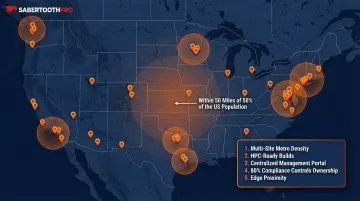
Founded in 2005, DataBank operates 65+ data centers in 28 US locations spanning coast to coast—from Seattle and Silicon Valley to Northern Virginia, Dallas, Miami, and Boston. The provider is known for SOC 2-certified micro-data centers.
What sets DataBank apart:
- Multi-site metro density, including 4 facilities in Minneapolis and multiple in Northern Virginia
- Network placement puts workloads within 50 miles of half the US population
- HPC-ready builds for high-density compute applications
- Centralized customer portal for unified dashboard management
- Ownership of up to 80% of compliance controls, reducing customer compliance burden
| US Footprint | Key Certifications | Best Suited For |
|---|---|---|
| 28 US locations; multi-site coverage in VA, MN, TX, NY, and more | SOC 2 Type II, HIPAA, PCI-DSS, FedRAMP, ISO 27001 | Mid-market, enterprise, compliance-driven industries, edge deployments |
Flexential
Flexential is a US-based colocation and managed IT provider with 40+ data centers across 18 markets, offering a single-provider platform (FlexAnywhere) covering colocation, cloud backup, disaster recovery, and managed services.
Flexential delivers power capacity up to 1,500+ watts per square foot for high-density applications and direct cloud connectivity to AWS, Azure, Oracle, and Google Cloud. The provider is supported by 360+ on-net carriers. FlexAnywhere provides automation, third-party integrations, and scalability management. Compliance coverage across HIPAA, PCI-DSS, and SOC 2 targets healthcare and finance workloads directly.
| US Footprint | Key Certifications | Best Suited For |
|---|---|---|
| 40+ data centers across 19 US markets | SOC 2 Type II, HIPAA, PCI-DSS | Mid-market enterprises, managed IT needs, disaster recovery |
TierPoint
TierPoint is a US-focused regional colocation provider with 40+ data centers in smaller and mid-sized cities across the country—filling geographic gaps that large national providers leave underserved. The company offers colocation, hybrid cloud, disaster recovery (DRaaS), and managed security services at every location.
TierPoint is built for businesses that need reliable infrastructure outside the major coastal hubs:
- Regional coverage in Tier 2/3 cities addresses compliance, latency, and proximity requirements
- Modular pricing by rack size, power, and services keeps entry costs manageable
- Disaster recovery and business continuity planning are built into the standard service model across all locations
| US Footprint | Key Certifications | Best Suited For |
|---|---|---|
| 40+ data centers across 20+ US states, including Tier 2/3 cities | SOC 2 Type II, HIPAA, PCI-DSS | Regional enterprises, SMBs, disaster recovery, multi-site businesses |
How We Chose the Best Colocation Providers
Providers were assessed across six core dimensions:
Geographic footprint and redundancy – US metro coverage and site availability in critical markets enable proximity to customers and disaster recovery capabilities.
Uptime SLA guarantees – Target 99.999% uptime (approximately 5.26 minutes of downtime per year), supported by redundant power (N+1 or 2N UPS configurations), backup generators, and redundant cooling.
Compliance certification depth – SOC 2, HIPAA, PCI-DSS, ISO 27001, FedRAMP. Verify certifications are site-specific, not just corporate-level claims.
Carrier-neutral connectivity and cloud on-ramps – Direct access to AWS, Azure, Google Cloud, Oracle, and 300+ carriers for multi-cloud and hybrid architectures.
Scalability – Ability to grow from single racks to hyperscale cages within the same facility, with predictable power and space expansion paths.
Remote hands and managed support services – Quality of on-site technical support, ticket response times, and managed service options for businesses without 24/7 IT staff.
The most common buyer mistake is choosing based on brand recognition or lowest price without verifying site-specific certifications. Workload requirements should drive the decision:
- Healthcare organizations need HIPAA-compliant, FedRAMP-eligible environments
- Financial services firms need PCI-DSS and SOC 2 Type II confirmed at the rack level
- AI-focused companies need high-density power configurations and GPU-ready cooling
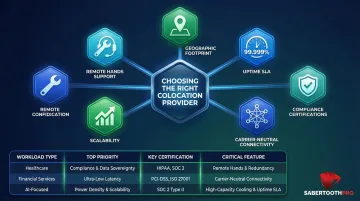
The right provider depends on what you're running — not who has the biggest name.
With 300+ colocation providers operating in the US market, navigating options independently is time-consuming and prone to costly mismatches. SabertoothPro's vendor-agnostic advisory model — backed by a 300+ partner ecosystem spanning colocation providers nationwide — gives businesses the ability to benchmark pricing, compare site-specific certifications, and match the right provider to their compliance, connectivity, and scale requirements without bias.
Conclusion
Choosing the right colocation partner in 2026 goes beyond picking the biggest name. The right fit depends on workload type, compliance requirements, geographic proximity, and how much infrastructure management you want to retain.
Before signing anything, run through these three checks:
- Total cost of ownership — not just monthly rack costs, but cross-connect fees, power overages, and remote hands rates
- Site-specific certifications — confirm SOC 2 or ISO 27001 applies to the actual facility, not just corporate-wide
- Scalability alignment — verify the provider's growth model fits where your business will be in 3-5 years, not just today
That's where SabertoothPro helps. Its vendor-agnostic advisory model and 300+ partner ecosystem help SMBs and mid-market companies identify, compare, and negotiate colocation solutions tailored to their exact needs. Call +1 888-891-2331 or visit sabertoothpro.com to get started.
Frequently Asked Questions
Who are colocation providers?
Colocation providers are companies that own and operate purpose-built data center facilities where businesses rent physical space (racks, cages, or suites) to house their own servers and networking hardware. The provider supplies power, cooling, physical security, and network connectivity.
What is the difference between colocation and cloud hosting?
In colocation, you own and manage your hardware inside a third-party facility. In cloud hosting, the provider owns the infrastructure and delivers virtualized resources on demand. Colocation offers more control and predictable costs at scale; cloud offers flexibility with no hardware investment.
How much does colocation cost per month in the USA?
Pricing is custom-quoted based on rack/cage space, power consumption (billed per kW), bandwidth, and support services. Single-rack plans typically start around $500/month, while primary market rates average $195.94 per kW/month for 250-500 kW requirements. Larger deployments with private cages and managed services run significantly higher.
What certifications should I look for in a colocation provider?
Key certifications to verify include:
- SOC 2 Type II — security controls audit
- ISO 27001 — information security management
- PCI-DSS — payment data security
- HIPAA-eligible — healthcare data handling
- FedRAMP or FISMA — government/federal data requirements
Always confirm certifications are site-specific, not just company-wide claims.
Is colocation right for small and mid-sized businesses?
Colocation works best for businesses that already own servers and need more reliable infrastructure than an on-premises setup provides. SMBs with compliance requirements (healthcare, finance, legal) or latency-sensitive applications benefit most. Very small businesses with minimal hardware may find cloud hosting more cost-effective.
What uptime guarantee should I expect from a colocation provider?
Enterprise-grade providers typically guarantee 99.999% uptime (roughly 5 minutes of downtime per year), backed by redundant power (N+1 or 2N UPS), backup generators, and redundant cooling. Before signing, request historical uptime data and confirm how SLA credits are calculated if targets are missed.