

This guide explains what truck telematics is, how the technology works, the core features that drive fleet performance, the measurable benefits you can expect, and proven best practices for implementation. You'll also learn how to select the right solution for your specific fleet needs and why reliable connectivity infrastructure is non-negotiable.
TLDR:
- Technology stack: Telematics combines GPS, IoT sensors, and cellular connectivity to collect and transmit real-time vehicle and driver data
- Core capabilities: Real-time tracking, driver behavior monitoring, engine diagnostics, fuel management, and ELD compliance
- Measurable ROI: Fleets save on fuel (up to 13% reduction), insurance premiums (10-20% discounts), and maintenance costs by preventing unplanned downtime
- Connectivity matters: Reliable multi-carrier cellular networks are the backbone—coverage gaps mean data gaps
- Vendor selection: Independent evaluation across multiple platforms delivers better fit and pricing than single-vendor sales cycles
What Is Truck Telematics and How Does It Work?
Truck telematics combines GPS, onboard diagnostics (OBD-II), IoT sensors, and cellular or satellite transmission to capture and analyze real-time vehicle and driver data. Unlike a basic GPS tracker that only shows location, telematics creates a two-way data flow between the vehicle and your operations center — turning raw signals into actionable fleet intelligence.
The Architecture Behind the Data
An in-cab hardware unit (telematics device or ELD) connects to the vehicle's CAN bus through the OBD-II port or a hardwired installation. It collects data from the engine control module (ECM), accelerometer, and GPS receiver, then transmits it over a cellular network to a cloud-based platform.
Fleet managers access dashboards displaying real-time location, engine health, driver behavior, and compliance status — all from a single interface.
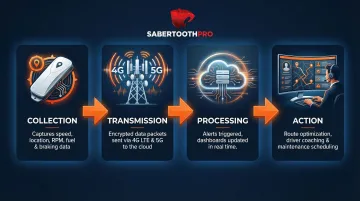
The data journey follows this path:
- Collection: Sensors capture vehicle speed, location, engine RPM, fuel consumption, harsh braking events, and idle time
- Transmission: A cellular modem (4G LTE or 5G) sends encrypted data packets to the cloud platform
- Processing: Cloud servers analyze incoming data, trigger alerts for geofence violations or maintenance issues, and update dashboards
- Action: Dispatchers optimize routes, fleet managers coach drivers, and maintenance teams schedule repairs based on real-time diagnostics
Telematics vs. ELD: Understanding the Relationship
The FMCSA's Electronic Logging Device mandate requires most commercial motor vehicle operators to use an ELD for Hours of Service compliance. An ELD automatically records driving time by synchronizing with the vehicle engine, eliminating paper logbooks and reducing HOS violations during inspections.
A full telematics platform includes ELD functionality but covers far more ground. Here's how the two differ in practice:
- ELD: Records driving hours, ensures HOS compliance, satisfies FMCSA mandate
- Telematics: Adds GPS tracking, preventive maintenance scheduling, fuel management, driver safety scoring, and TMS integration
ELD handles compliance. Telematics handles everything else that keeps a fleet profitable and safe.
Core Features of a Truck Telematics System
Real-Time GPS Fleet Tracking
Live vehicle location tracking enables dispatchers to monitor every truck's position, view route history, and receive alerts when vehicles enter or exit designated geofenced zones. This visibility allows for:
- Route optimization to avoid traffic or construction delays
- Detection of unauthorized detours or stops
- Accurate ETAs provided to customers
- Proof of delivery timestamps
Geofencing triggers automatic notifications when a truck crosses virtual boundaries — useful for yard entry/exit, customer site arrivals, and restricted zones.
Driver Behavior Monitoring
Telematics records driving events that directly affect safety outcomes and fuel costs:
- Harsh braking and rapid acceleration
- Speeding beyond posted limits or fleet thresholds
- Sharp cornering and aggressive lane changes
- Distracted driving indicators
This data feeds driver scorecards used for coaching programs, incentive structures, and identifying high-risk operators before incidents occur. Fleets implementing AI safety solutions see crash rates drop by 73% over 30 months when combining dash cams, in-cab alerts, and structured coaching.
Engine Diagnostics and Predictive Maintenance
The system reads fault codes (DTCs) from the vehicle's ECM in real time, alerting fleet managers to engine issues before they cause roadside breakdowns. Predictive maintenance shifts from calendar-based oil changes to condition-based scheduling driven by actual engine hours, temperature trends, and component wear patterns.
Common alerts include:
- Low oil pressure or coolant temperature warnings
- Brake wear indicators
- Battery voltage drops
- Transmission fault codes
With unplanned commercial truck downtime costing fleets between $448 and $760 per day per vehicle, catching fault codes early is the difference between a $50 sensor fix and a multi-day repair bill.
Fuel Management and Idle Monitoring
Heavy-duty trucks consume approximately 0.8 gallons of diesel per hour while idling. Telematics quantifies idle time across your fleet, identifies which drivers or routes burn the most fuel, and flags inefficient driving patterns like excessive acceleration or prolonged high-RPM operation.
Fleet managers use this data to:
- Set idle-time targets and measure compliance
- Coach drivers on fuel-efficient habits
- Compare fuel consumption per route or load type
- Identify vehicles with mechanical issues causing poor fuel economy
ELD and HOS Compliance Management
Integrated ELD functionality automatically logs driving time against FMCSA Hours of Service rules, flags upcoming violations before they occur, and generates electronic Records of Duty Status (RODS).
This eliminates paper logbooks and sharply reduces the risk of compliance citations during DOT inspections.
The platform tracks:
- Daily and weekly driving limits
- Required rest breaks
- On-duty vs. off-duty status
- Automatic logging when vehicle motion is detected
Key Benefits of Truck Telematics for Fleet Operations
Fuel Cost Reduction
Route optimization and idle reduction deliver measurable savings. Top-performing fleets using telematics reduced fuel consumption by 13% and idling time by 20%, while another study found fleets saved an average of $1,552 per vehicle annually with a 4% fuel consumption reduction.
The savings come from:
- Eliminating unnecessary idle time during rest breaks or deliveries
- Identifying and correcting inefficient routes
- Coaching drivers to avoid aggressive acceleration and excessive speed
- Detecting vehicles with mechanical issues causing poor fuel economy
Improved Driver Safety and Reduced Accidents
Continuous driver behavior monitoring enables targeted coaching that changes habits. Geotab reported a 38.7% reduction in collisions per million miles across North America between 2021 and 2025, while another analysis found that AI video monitoring combined with coaching programs yields a 25-73% crash reduction.
Proactive safety management through telematics reduces:
- Collision frequency and severity
- Liability exposure and legal costs
- Worker compensation claims
- Vehicle repair and replacement expenses
Lower Insurance Premiums
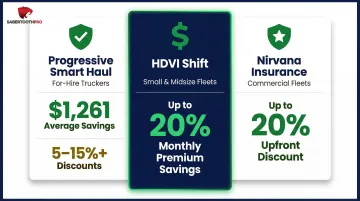
Commercial auto insurers now offer substantial discounts to fleets deploying telematics because the data demonstrably reduces risk. Usage-based insurance (UBI) programs feed telematics data directly into underwriting models:
| Insurer | Target Audience | Discount |
|---|---|---|
| Progressive Smart Haul | For-hire truckers | Average $1,261 savings; 5-15%+ discounts |
| HDVI Shift | Small/midsize fleets | Up to 20% monthly premium savings |
| Nirvana Insurance | Commercial fleets | Up to 20% upfront discount |
Reduced Vehicle Downtime and Maintenance Costs
Predictive diagnostics shift maintenance from reactive breakdowns to proactive scheduling. When the system flags a failing component early, you book repairs during planned downtime rather than scrambling mid-delivery.
That timing matters. Unplanned roadside failures can cost up to $2,000 per day once you factor in lost revenue, expedited repair fees, and customer recovery efforts — making early detection one of the highest-ROI features in any telematics platform.
Operational Efficiency and Customer Service
Better maintenance visibility feeds directly into day-to-day operations. Accurate ETAs, real-time dispatch adjustments, and proof-of-delivery capabilities improve customer satisfaction, while asset utilization tools help fleets identify underused vehicles, cut empty miles, and take on more loads without adding trucks.
Improved visibility translates to measurable revenue impact through:
- Higher on-time delivery rates
- Reduced customer service inquiries
- Ability to provide proactive delay notifications
- Data-driven decisions about fleet expansion
Best Practices for Implementing Truck Telematics
Define Your Fleet Goals Before Selecting a Platform
Identify the specific problems you need to solve—compliance risk, fuel waste, driver safety, theft prevention, or all of the above. Fleets that buy technology without clear objectives end up with underutilized systems and poor ROI.
Create a prioritized requirements list with input from:
- Drivers who will interact with in-cab devices daily
- Dispatchers who need real-time visibility and route optimization
- Finance teams tracking fuel costs and maintenance budgets
- Safety managers responsible for reducing incidents
Involve Drivers Early and Address Privacy Concerns
Driver buy-in determines telematics success. Address surveillance concerns transparently by framing monitoring as a safety and coaching tool, not a discipline mechanism.
Best practices include:
- Establish a clear data-use policy communicated before deployment
- Explain how telematics protects drivers (documenting accidents, proving compliance)
- Create driver incentive or recognition programs tied to safety scores
- Provide training on how to use the system and interpret their own data

Ensure Reliable Cellular Connectivity Across Operating Corridors
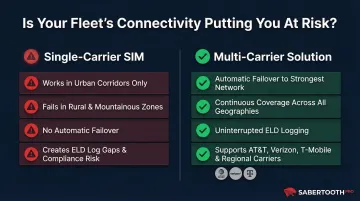
Telematics data is only as good as the network delivering it. A device that loses signal in a rural corridor leaves dispatchers blind and creates gaps in ELD logs that trigger compliance questions.
Single-carrier SIM cards create a real vulnerability. If that carrier has weak coverage on Route 80 through Nevada or I-90 across Montana, your trucks go dark. Multi-carrier solutions automatically fail over to the strongest available network, keeping data flowing continuously across the full route.
Key capabilities to look for in a connectivity solution:
- Multi-carrier failover that switches networks without manual intervention
- Private APN access for encrypted, isolated data transmission
- Pooled data plans that scale across large fleets without overage surprises
- Carrier-certified hardware tested for in-vehicle deployment conditions
SabertoothPro's multi-carrier IoT connectivity and Private APN solutions address exactly this gap — providing encrypted data transmission across challenging coverage areas with pooled plans that eliminate unpredictable overage charges.
Integrate Telematics Data with TMS and Other Fleet Software
Telematics delivers maximum ROI when its data feeds into your transportation management system, payroll and IFTA reporting platforms, and maintenance software. Disconnected data silos force manual reconciliation and obscure the full picture of fleet performance.
Look for telematics providers offering:
- Open APIs for custom integrations
- Pre-built connectors to major TMS platforms
- Automated data exports for accounting and reporting
- Single sign-on for simplified user access
Establish KPIs and Review Cadence Before Launch
Define baseline metrics before go-live so you can measure ROI objectively. Without a pre-deployment baseline, you can't demonstrate what changed — or justify the investment to leadership.
- Current fuel cost per mile
- Accident frequency and severity rates
- Average idle time percentage
- Unplanned maintenance events per vehicle per month
- On-time delivery percentage
Run a monthly fleet performance review against these baselines. Most fleets surface their biggest cost drivers within the first 60–90 days — idle time and hard braking tend to be the first wins.
Connectivity Infrastructure: The Foundation of Reliable Telematics
Why Connectivity Makes or Breaks Telematics Performance
A telematics device that loses cellular signal creates operational blind spots. Dispatchers can't track location, ELD logs show gaps that raise compliance questions, and diagnostic alerts never reach the operations center.
Single-carrier SIM deployments work fine in urban corridors but fail in rural zones, mountainous terrain, or areas where that carrier has weak infrastructure. Multi-carrier solutions automatically switch to the strongest available network (AT&T, Verizon, T-Mobile, or regional carriers), ensuring continuous data transmission regardless of geography.
Private APN: Security for Fleet Data
A Private Access Point Name (APN) creates an encrypted, dedicated data channel between fleet devices and your telematics platform, isolating vehicle data from the public internet. According to NMFTA cybersecurity requirements and Verizon's guidance on wireless private networks, Private APNs reduce exposure to malware and unauthorized access.
This security layer is especially important for fleets:
- Transporting sensitive cargo (pharmaceuticals, government contracts)
- Operating under CMMC or other cybersecurity compliance frameworks
- Managing customer data through integrated TMS platforms
- Subject to insurance requirements around data protection
Optimized IoT Data Plans: Controlling Total Connectivity Costs
Security and cost management go hand-in-hand when building reliable telematics infrastructure. Fleets running dozens or hundreds of devices accumulate substantial monthly data bills — and individual per-device plans make that worse, creating unpredictable overages when one truck on a cross-country haul burns more data than five local delivery vehicles combined.
Pooled data plans share a single allowance across all devices, smoothing usage spikes and eliminating overages. SabertoothPro leverages a 300+ carrier partner ecosystem and real-time price benchmarking to source right-sized, multi-carrier data plans for fleet IoT deployments — giving operators a clear path away from vendor lock-in and toward predictable costs.
How to Choose the Right Truck Telematics Solution
Key Evaluation Criteria
Apply these criteria when comparing platforms:
| Criterion | What to Evaluate |
|---|---|
| Hardware reliability | Hardwired vs. plug-and-play OBD; ruggedized components; warranty terms |
| Platform usability | Dashboard intuitiveness for dispatchers and fleet managers; mobile app quality |
| Reporting depth | Customizable reports; API access for data extraction; integration options |
| Vendor support | SLA response times; onboarding and training included; driver support resources |
| Contract flexibility | Length of commitment; cancellation clauses; upgrade/downgrade options |
| Total cost of ownership | Hardware, monthly SaaS fees, cellular data plans, installation costs |
Vendor-Neutral Evaluation vs. Single-Vendor Sales
A single telematics vendor's sales team will naturally promote their own platform. You'll receive quotes based on their pricing model and feature set, with little visibility into how competing platforms compare.
A vendor-agnostic technology advisor evaluates multiple platforms against your specific requirements and benchmarks pricing using real-world contract data. SabertoothPro operates as an independent IT advisor — no vendor allegiances, access to 300+ technology and IoT solution partners — so trucking and logistics operators get an honest platform match and negotiated pricing, not a sales pitch.
Questions to Ask Any Telematics Vendor Before Signing
Before you sign anything, get direct answers to these questions from every vendor you evaluate:
- Does the platform include FMCSA-compliant ELD functionality?
- What cellular carriers does your hardware support? Single-carrier or multi-carrier?
- Is data encrypted in transit and at rest? Do you support Private APN deployments?
- What are the contract terms and cancellation clauses?
- Do you offer API access to integrate with our TMS, payroll, and maintenance systems?
- What onboarding support, driver training, and ongoing technical assistance is included?
- What is your hardware warranty and replacement policy?
- How is cellular data billed—per device, pooled, or unlimited?
Frequently Asked Questions
What is the difference between truck telematics and a GPS tracker?
A GPS tracker only shows vehicle location. Truck telematics is a full data platform adding engine diagnostics, driver behavior monitoring, ELD compliance, fuel tracking, and analytics—making it far more actionable for fleet management.
Is truck telematics required by law?
The FMCSA's ELD mandate requires most commercial motor vehicle operators to use an Electronic Logging Device for HOS compliance. Exemptions exist for short-haul operations, drive-away-tow-away, and vehicles manufactured before 2000. Full telematics platforms typically include ELD functionality.
How much does a truck telematics system cost?
Costs vary by provider, fleet size, and features. Monthly SaaS subscriptions typically range from $25–$50 per vehicle, with hardware running $100–$300 per unit. Factor in cellular data plans as well—these add $10–$30 per vehicle monthly depending on coverage and pooling arrangements.
How does telematics help reduce fuel costs?
Telematics pinpoints excessive idling, inefficient routes, and aggressive driving patterns that drain fuel. Coaching drivers on behavior data and optimizing dispatch routing are the two primary levers, with top fleets achieving 10–13% reductions.
What cellular connectivity do truck telematics systems use?
Most modern telematics rely on 4G LTE networks, with newer platforms moving toward 5G. Multi-carrier SIM solutions ensure coverage continuity in rural and remote corridors where a single carrier may have gaps, maintaining uninterrupted data transmission.
How long does it take to implement truck telematics across a fleet?
Installation takes 10–30 minutes per vehicle for plug-and-play OBD devices, or 60–120 minutes for hardwired units with cameras. Most small to mid-sized fleets are fully operational within 2–4 weeks, including driver training and system configuration.